 Home
Home  About us
 Partner
  Products
 News
News Certificate
 Contact Us


How many checkpoints does a machine have to pass before it makes its way from the workshop to the customer's hands?
A brief inspection at the material inspection station, a screw torque check on the final assembly line, or a slight temperature difference inside the sintering furnace—these seemingly mundane actions, almost imperceptible at first glance, ultimately converge into that casual "Everything's fine" statement at the time of delivery.
Quality is not just a slogan—it's something built up by a team of people who take things seriously, step by step and day by day.
In this issue, we meet three frontline employees from different companies and roles. Although they vary in age and personality, they all share the same title: Quality Gatekeepers.
In this issue, we meet three frontline employees from different companies and roles. Although they vary in age and personality, they all share the same title: Quality Gatekeepers.
Steady in hand, steady in heart.
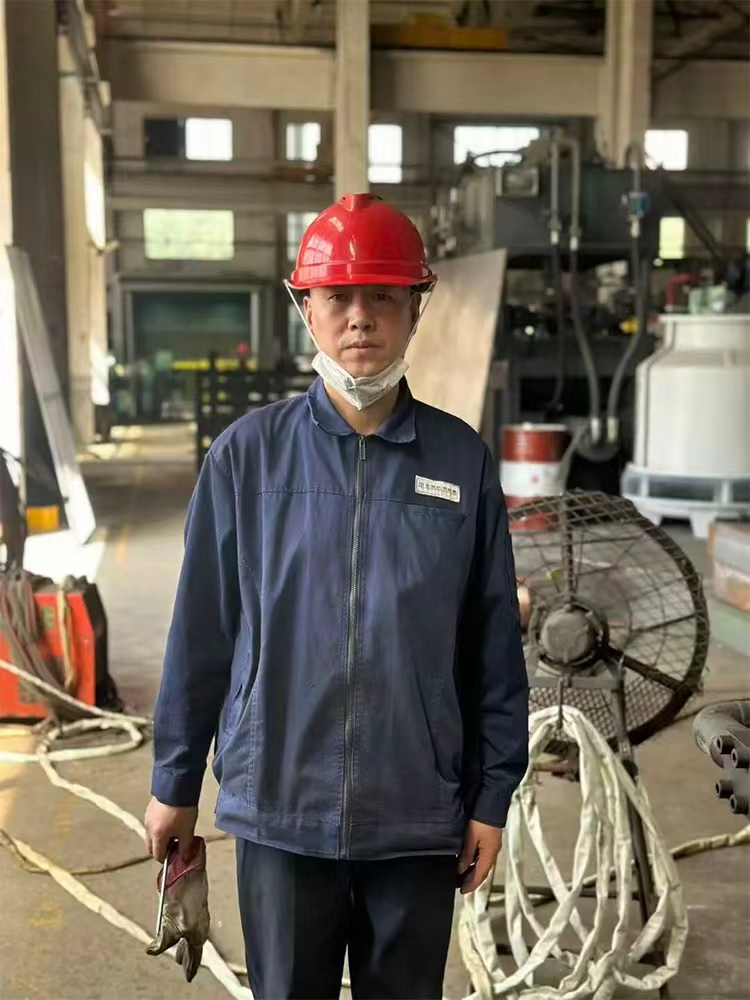
Ma Guofu – Renewable Resources Equipment Sector; Huahong Environmental Protection – Final Assembly and Commissioning Technician
Find Ma Guofu in the workshop – there's no need to shout. Just follow the sound of the machinery operating; the person crouching beside the machine is him.
Installing machinery is a "slow" task – it involves aligning and assembling each component one by one, ensuring screws are tightened properly and pipelines are connected seamlessly. Some might seek shortcuts, but he doesn't; he can't articulate any grand principle, yet he simply habitually shakes the assembly a few more times and tightens it once more – after all, the equipment installed must be able to withstand real-world use.
Troubleshooting is even more tedious. The hydraulic pressure, operating speed, and coordination between each movement – a slight deviation in any parameter could cause the machine to "refuse to respond." He would sit beside it, testing and adjusting time and again, refusing to rest until everything ran smoothly.
Even more admirable is another fact: he rarely takes time off. Throughout the year, whether it's cold or hot, he can always be seen in the workshop. When faced with urgent orders or tight deadlines, he immediately stays behind to work overtime, ensuring that all tasks at hand are completed efficiently before moving on.
When asked why he never missed a day of work, he gave a simple, honest smile and said, "There's nothing major going on at home – coming to work gives me peace of mind."
He doesn't talk much, but he's genuinely down-to-earth. When a new colleague looked bewildered while holding some blueprints, he simply picked up a wrench and demonstrated the process on the spot—after all, a single demonstration is often more effective than a hundred words. Whenever someone had a pile of work piling up, he would lend a hand the moment he noticed—never once wondering whether this was part of his own duty.
He didn't utter any grandiose words; instead, he turned each ordinary day into the simple notion of being "reliable."
Reaching into places invisible to the naked eye
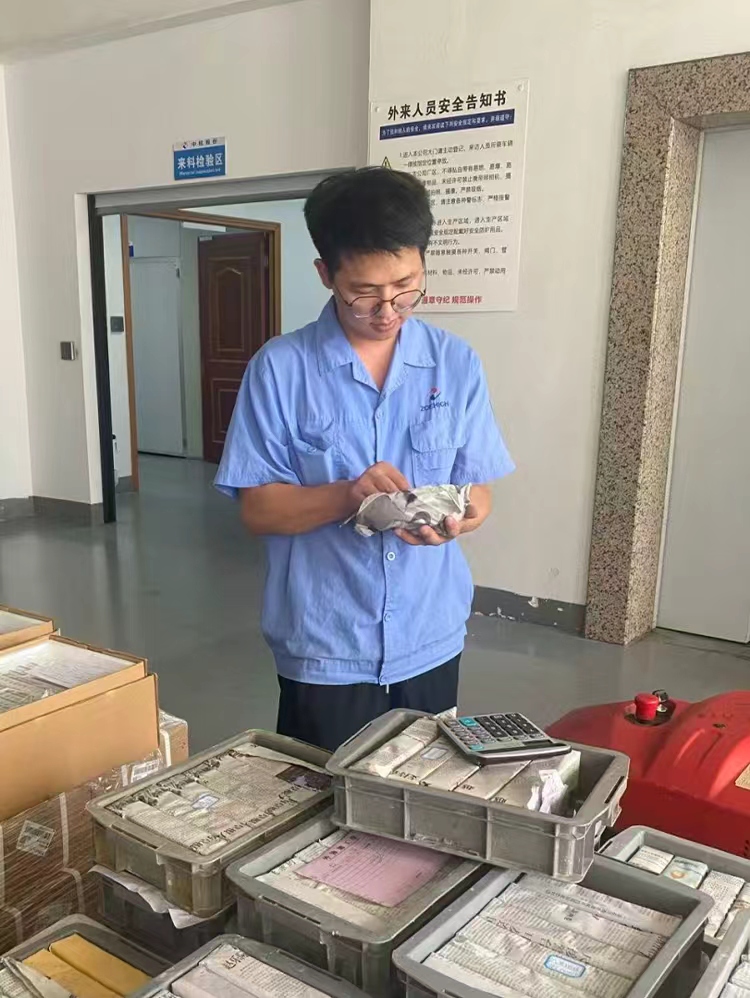
Tian Zhize – Raw Material Inspector, Rare Earth Magnetic Materials Division, Zhonghang Times
At the incoming material inspection area, turnover boxes are stacked into a low wall, with the materials to be inspected arranged one by one. Inside this wall, a man wearing blue workwear is bent over, focused intently, using both hands to inspect the appearance of the materials and checking the batch information row by row. He is Tian Zhize.
Raw material inspection may sound like a job with "little technical complexity" – simply counting, inspecting, recording, and verifying materials day after day. Yet, this seemingly mundane process serves as the first line of defense for product quality. Should any defective materials be introduced into the supply chain, all subsequent manufacturing steps will be held accountable for the consequences.
He understood this better than anyone else. Therefore, when handling large quantities of goods upon receipt, he never relaxed his standards simply because the volume was large: he verified each document individually, inspected every package one by one, and cross-checked every specification item by item—leaving no instance of damage or deviation unaddressed. The tedious, repetitive inspection process did not wear down his patience, nor did the high volume of daily work lower his standards.
Sweat soaked his clothes, and the sweltering heat clung to his body. Yet he still reported to work on time, bending over to count inventory and inspect materials in hand—without a word of complaint or any sign of relaxation.
When encountering challenging materials, he proactively reported them and followed up until resolution; whenever he had a brief moment off, he would organize the goods awaiting inspection neatly and maintain clear, well-kept material records, ensuring that the inspection area always remained tidy and orderly.
Even the slightest deviation does not qualify.
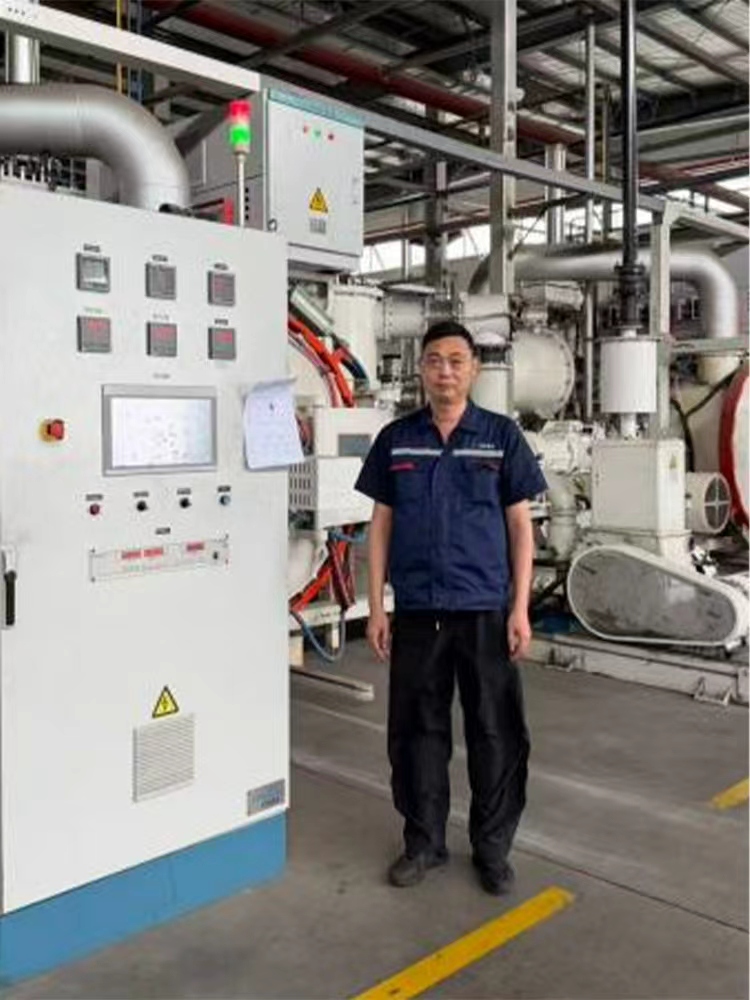
Chen Mangang – Rare Earth Magnetic Materials Division; Head of Sintering Section, Zhonghang Industrial
The sintering of NdFeB magnets is the most critical stage in the entire production chain.
Temperature, vacuum level, and holding time – even the slightest deviation in any of these parameters can directly affect the performance, density, and stability of the magnetic material. A mere millimeter's difference can result in a world of difference in the yield rate.
For many years, Chen Manggang has been overseeing this most meticulous production process. He possesses a detailed mental record—more precise than any technical drawing—about the specific characteristics of each sintering furnace and the optimal adjustment of each set of process parameters.
From loading the furnace, sintering, and cooling to unloading the products, he oversees every step of the process, transforming actions repeated countless times into a level of precision that is almost rigorous. His on-site inspections are never mere formalities—he doesn't miss a single anomaly, whether it concerns the equipment status or production data.
He was not content with merely "completing tasks according to established procedures." When dealing with products of different grades or specifications, he would carefully analyze them based on the material properties; when faced with issues such as production capacity bottlenecks, high waste rates, or insufficient product consistency, he would take ownership of each problem individually: he adjusted the placement of graphite舟皿, refined the sintering temperature control process, and enhanced the operational procedure standards.
Single-furnace production capacity has been increased, the yield rate has improved, and energy consumption as well as material waste have been reduced.
As a section supervisor, he always prioritizes safety and quality above all else. Before each shift begins, he personally leads the comprehensive equipment inspection to ensure that no machinery is operated while faulty; he meticulously verifies and accurately records all production figures, product yield rates, and material consumption – ensuring that every piece of data is authentic and traceable. Whether it's night shift duties, equipment maintenance, or urgent production demands, he never shies away from taking on these tasks – always stepping forward at the forefront.
He often says: An individual's excellence is but a faint glimmer; the excellence of a team is like a vast galaxy.
When a new colleague joined the team, he personally guided them through operations, safety protocols, and how to handle anomalies; whenever any team member encountered a challenge, he would proactively offer assistance; he also regularly organized technical training sessions and safety drills, uniting the entire team as one cohesive unit. Under his leadership, a culture of rigor, pragmatism, and mutual support took root within the team, enabling them to successfully overcome numerous complex, time-sensitive production challenges time and again.
The wrench in Ma Guofu's hand, the inspection sheet in front of Tian Zhize, and the sintering furnace that Chen Mangang had guarded for years—these items seemed utterly unrelated.
However, they all point to the same thing: ensuring that all necessary details are properly executed.
In them, we see the same kind of meticulousness – the meticulousness of ensuring every screw is tightened to the exact specification, the meticulousness of conducting thorough batch verification, and the meticulousness of fine-tuning parameters with the utmost precision. This meticulous approach is neither dramatic nor ostentatious, yet it forms the most solid foundation for any manufacturing enterprise.
They safeguard every step of the production process, uphold the confidence that comes with the product's departure, and bear the weight of the name "Huahong Manufacturing."